Blog
Latest Innovations in Printing Technology: Top 5 Uses of Large Format Printers in the Construction Sector

Technical Printing
|1 Feb 2024
The construction sector has long lagged behind in adopting new technology. But technological innovations are now completely reshaping how projects are conceived, planned, and executed in the AEC industry. Cutting-edge solutions like computer-aided design (CAD), prefabrication, and building information management (BIM) are becoming the standard tools for construction projects. As a result, large format printers have emerged as indispensable tools to improve the efficiency of construction worksites.
Large format printers offer unparalleled capabilities for rendering intricate architectural designs and enhancing project visualisations through 3D models. They also have a vital role in construction site communication, making detailed plans and safety guidelines easily available to improve safety and maintain compliance on job sites. Here, we'll explore the role of large format printers in construction. Then we'll underline five ways in which the latest innovations in printing technology can supply efficiency, collaboration, and success in the AEC industry.
Why AEC Organisations Need to Embrace New Technologies
Nearly two-thirds of AEC professionals believe that the industry isn't evolving fast enough to meet society's changing needs. As droves of long-term workers reach retirement age, the construction workforce shortage has grown to over half a million. At the same time, material costs and shipping issues continue to impact profits. Also, a focus on sustainability places new demands on construction firms. These changes mean construction companies will have to find ways to do more with less.
The Importance of Innovation in the Construction Sector
Even as the workforce is dwindling, the demand for construction services remains high. Meanwhile, sustainability has become a main focus in the construction process and the lifecycle of buildings. Innovation supplies AEC professionals with efficient processes that can help reduce material waste and energy consumption during the build. New innovations in the construction industry can even provide a full picture of the AEC project lifecycle before building begins. This proactive insight helps to reduce the energy requirements of modern buildings.
The Role of Large Format Printers in Construction
Exploring the Latest Innovations in Printing Technology in Large Format Printers
Printers have changed drastically from those in the past to increase portability, improve communications, and work with other modern technologies to streamline workflows. A variety of innovations make them attainable and necessary for modern construction firms.
- Increasing Sustainability: Modern large format printers are built for sustainability with recyclable materials, smaller bodies, and improved functions to reduce waste. Energy-saving features help them achieve optimal performance while reducing energy use.
- Connectivity: Connectivity features allow you to print and share from anywhere, taking the guesswork out of communications and reducing miscommunication.
- Security: Remote communications are essential in any modern workplace, and built-in security features, like the HP Wolf Pro Security, contain threats to help companies avoid data leaks and security concerns.
What Are the Top 5 Uses of the Latest Large Format Printers in the Construction Sector?

Large format printers are critical to accuracy, efficiency, and convenience in the construction sector. Here are the top five ways the latest innovations in printing technology are making the use of large format printers in the construction sector indispensable.
1. To Achieve Detailed Architectural Drawings and Construction Plans
2. To Get Clarity on Project Visualisation
3. To Create Important On-Site Signage and Banners
4. To Have Easy Access to Construction Documentation
5. To Print Customised Marketing Materials
What AEC and Construction Firms Expect for the Future of Large Format Printing
As innovative construction equipment evolves and changes, large format printers will hold a critical place in the list of the latest innovations in printing technology. Based on current technology and innovations in construction, these are some of the predictions for the future of large format printing in construction.
- AI and Machine Learning: When used effectively, artificial intelligence (AI) automates tasks and improves transparency. The increased use of predictive analytics and machine learning can help companies understand future outcomes. You can look at past data to inform design decisions and print more intricate plans.
- Truly Connected Construction: As data, workflows, and technology become more connected, dispersed teams will be able to depend on a single source of truth. Also, printed plans can be continually updated.
- Robotic Construction Layout Printing: Construction crews can use layout robots to print digital layouts onto the floor, reducing layout and labour costs with autonomous technology. With increased accuracy and up to 10x productivity gains, crews can achieve more with fewer resources.
Reach Out to HP with Your Large Format Printing Needs
As the latest innovations in printing technology unfold, large format printers are emerging as an indispensable tool for efficiency and accuracy in the building process. Contact HP today to learn more about our various large format plotters and printers for the construction industry or to get help finding the printer to suit your AEC printing needs.
Download our eBook now and discover how innovation is streamlining workflows, producing prints of unmatched quality and increasing IT efficiency like never before.
Download eBook nowRelated printers
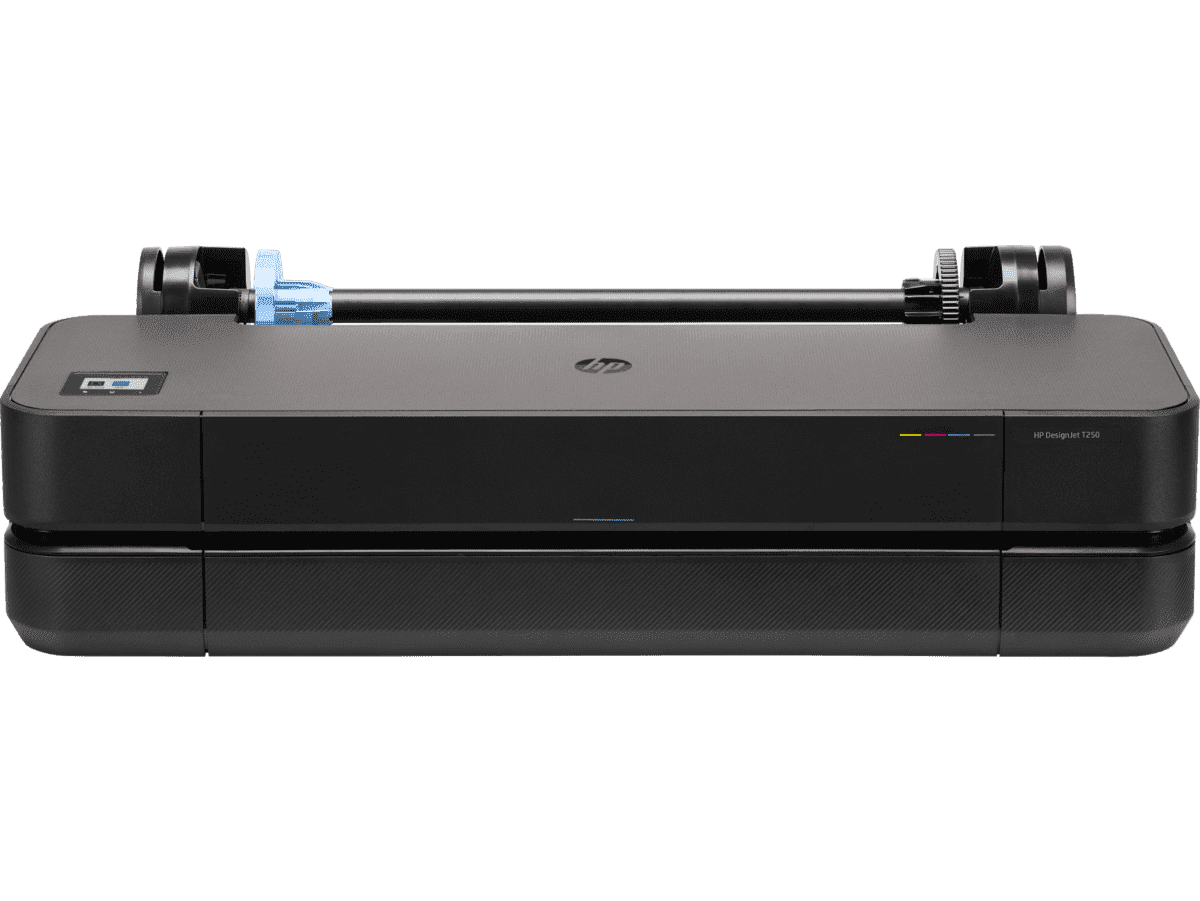
HP DesignJet T250 24-inch Compact Large Format A1 Plotter Printer + HP DesignJet T200/T600 Automatic Sheet Feeder + HP Installation Service for Design
A1 Colour HP DesignJet Large Format Printer, Perfect for Small Offices & Business Print 30 sec/page on A1; 76 A1 prints per hour USB, Ethernet, Wi-Fi Touchscreen; Automatic document feeder; Front USB flash drive port
MYR 5860.00MYR 4980.00Buy now
You Might Also Like
Cost-Effective Printing of Safety Plans and Wayfinding Information
How to Make Your Printer Faster for Urgent Blueprints
Paper-Saving Techniques When Printing AEC Blueprints
Plotter Care Habits That Keep Your Blueprints Job-Ready
How Scheduling Plotter Saves Electricity Costs
Remote Printing Guide to Increase AEC Workflow Efficiency
Cut AEC Operating Costs With HP Plotters
How HP Click Can Streamline Working Processes
6 Tips to Portfolio Printing for AEC Professionals

Blueprint Annotation Guide: How to Add Notes that Stay Sharp on Paper

How GIS Mapping Tools Support Large Format Printing for Civil Engineering

A Guide to Large Format Printing For Architects and Designers
Printing Topographical Maps: What AEC Professionals Should Know

How to Use Large Format Plotters for Facility Management Floorplans

Common Mistakes & Fixes for Poor-Quality Blueprints

Common Print File Types for Blueprints Explained

Common Printing Mistakes: How to Avoid Costly Errors in Large Format Jobs

Digital vs. Paper: When to Print Architectural Drawings and When to Share Digitally

Best Practices for Marking Up and Revising Printed Architectural Plans

3 Keys to Print Emergency Maps That Enhance Disaster Response
Select Your Country/Region and Language
Close Country/Region Selector Dialog
Europe, Middle East and Africa
- Africa
- Afrique
- België
- Belgique
- Česká republika
- Danmark
- Deutschland
- Eesti
- España
- France
- Hrvatska
- Ireland
- Italia
- Latvija
- Lietuva
- Magyarország
- Middle East
- Nederland
- Nigeria
- Norge
- Österreich
- Polska
- Portugal
- România
- Saudi Arabia
- Slovenija
- Slovensko
- South Africa
- Suisse
- Suomi
- Sverige
- Switzerland
- Türkiye
- United Kingdom
- Ελλάδα
- България
- Казахстан
- Србија
- Україна
- ישראל
- الشرق الأوسط
- المملكة العربية السعودية
Country/Region :
Close Country/Region Selector
SelectedMalaysia
popUpSRBeginingLabelString
HP Worldwide
Select Your Country/Region and Language
Click or use the tab key to select your country
Close Country/Region Selector Dialog
- Africa
- Afrique
- América Central
- Argentina
- Asia Pacific
- Australia
- Bangladesh
- België
- Belgique
- Bolivia
- Brasil
- Canada
- Canada - Français
- Caribbean
- Česká republika
- Chile
- Colombia
- Danmark
- Deutschland
- Ecuador
- Eesti
- España
- France
- Hong Kong SAR
- Hrvatska
- India
- Indonesia
- Ireland
- Italia
- Latvija
- Lietuva
- Magyarország
- Malaysia
- México
- Middle East
- Nederland
- New Zealand
- Nigeria
- Norge
- Österreich
- Pakistan
- Paraguay
- Perú
- Philippines
- Polska
- Portugal
- Puerto Rico
- România
- Saudi Arabia
- Singapore
- Slovenija
- Slovensko
- South Africa
- Sri Lanka
- Suisse
- Suomi
- Sverige
- Switzerland
- Türkiye
- United Kingdom
- United States
- Uruguay
- Venezuela
- Việt Nam
- Ελλάδα
- България
- Казахстан
- Србија
- Україна
- ישראל
- الشرق الأوسط
- المملكة العربية السعودية
- ไทย
- 中华人民共和国
- 臺灣 地區
- 日本
- 香港特別行政區
- 한국
- Recalls |
- Product recycling |
- Accessibility |
- Privacy |
- Terms of use |
- Limited warranty statement |
- Use of Cookies |
©2026 HP Development Company, L.P. The information contained herein is subject to change without notice.