Blog
How Intelligent Automation Can Help Print Businesses Work Smarter
Graphic Arts
|25 Nov 2020
Print businesses have undergone huge digitalization over recent years. They’ve had to so they can drive process and cost efficiencies in tough times and accelerate their competitiveness. The cost of inaction just isn’t worth it—it’s “do or die”.
Yet technology still has much more to offer, especially around intelligent automation, the use of AI, and machine learning to optimize systems and processes.
Businesses can wield technology to make operations run more effectively and, in doing so, drive down costs, errors, bottlenecks, and wastage. They can also harness it to improve productivity, workload capacity, and time to market.
As a result, automation can lead to improvements in efficiency, customer service, and profitability, making it well worth pursuing.
Why print businesses are embracing automation
Automation is clearly on the rise. In 2020, Keypoint Intelligence1 asked print businesses to compare their current usage of automated workflows for on-site print volumes with their expectations for the future. The survey discovered that while 63% of volume was produced without any automation in 2020, that figure will drop to 36% by 2022, indicating that print business owners expect to increase their use of automated workflows significantly.
One of the biggest drivers for automated workflows is speed: the ability to rapidly complete client jobs. According to the last published FESPA Census, almost three quarters of print businesses are seeing increased demand from customers for faster turnaround times.2
Furthermore, 59% believe that customer demand for ‘just-in-time’ deliveries will increase. Expanding your use of digital printing, combined with intelligent automation, can help on both fronts.

Improving uptime with remote monitoring
Having the right technology can make all the difference.
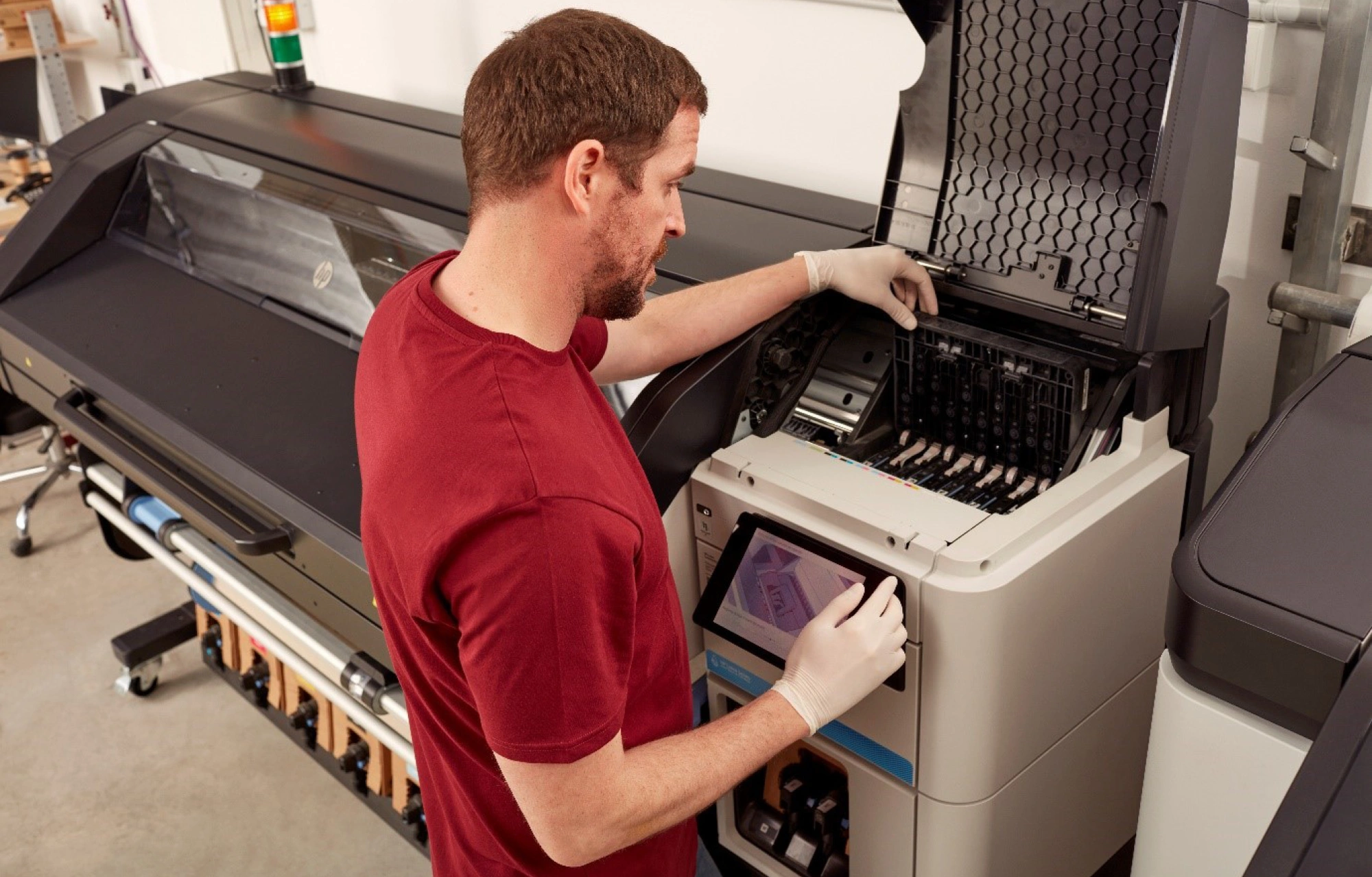
For instance, remote monitoring tools that come with modern large-format printers enable you to monitor the usage levels of print fleet so you can control your print costs and maintain uptime and productivity.
As well as making your operations more streamlined, and highlighting where cost efficiencies can be made, automation technologies like these will enable your business to create more accurate quotes, and negotiate more competitive prices with suppliers.
However, many print businesses have some way to go. According to the FESPA Census, print businesses have been largely indifferent to MIS software so far. An alarming 58% said they had no plans at all to invest. A change in outlook could be one way to stand out from the crowd.
How e-commerce platforms could create new opportunities
While a lot of businesses will continue to receive their orders off-line, customers are showing an increased appetite to specify and place orders online. There are natural synergies between e-commerce and digital printing, offering print businesses the opportunity to expand their customer reach, use online platforms and automated backend processes to fulfil orders more quickly and efficiently, and add analytics to
print sales and services.
Why now is the time for change
Print businesses large and small are building on the transformation journey they began in recent years and accelerated through the pandemic. Smarter use of automation can create new efficiencies, control costs, and hasten turnaround times for customers that increasingly demand just-in-time services. Digital printing levels the playing field and gives smaller print business owners the power tools they need to compete with larger competitors. But regardless of whether your print business is large or small, now is the time for change, with intelligent automation presenting itself as a game changer.
Footnotes
Print businesses large and small are building on the transformation journey they began in recent years and accelerated through the pandemic.
Learn more Learn more
You Might Also Like

How to Gain Green Certification With Large Format Printing

Architecture Landscape Plan Guide: Understanding Site Planning, Landscape Architecture, and Urban Planning

Sustainable Printing Methods: 7 Tips for Eco-Friendly Blueprint Printing
 20/30 CAD
Say yes to big opportunities and bigger margins

The Key Elements of a Sustainable House Design

Smart Building Automation Systems & How They Reduce Costs

Understanding Cost of Sustainable Construction: Is It Cheaper?

Building Automation Trends: Why Automation Is Crucial for AECs

What to consider to print sustainably
How to support employee wellbeing in the print industry

Green Building Benefits: Importance of Eco-Friendly Construction

How HP PrintOS helped Benson stay agile

Top 5 Ways In Which AECs Are Using Green Building Materials in 2024

HP Latex Print and Cut Plus Solutions spotlight: Level-up your print operations

Sustainability in Architecture: Designing for the Future

Driving a Zero-Carbon Future with Sustainable Construction Materials

From Green Building Construction to Digital Offices: 4 Predictions for Post-Covid Architecture

5 Ways AECs Can Go Green With Eco-Friendly Office Printing
9 Essential Tips for Car Wrapping

Sustainable Construction: The Eco-Conscious Future Of The AEC Sector
Select Your Country/Region and Language
Close Country/Region Selector Dialog
Europe, Middle East and Africa
- Africa
- Afrique
- België
- Belgique
- Česká republika
- Danmark
- Deutschland
- Eesti
- España
- France
- Hrvatska
- Ireland
- Italia
- Latvija
- Lietuva
- Magyarország
- Middle East
- Nederland
- Nigeria
- Norge
- Österreich
- Polska
- Portugal
- România
- Saudi Arabia
- Slovenija
- Slovensko
- South Africa
- Suisse
- Suomi
- Sverige
- Switzerland
- Türkiye
- United Kingdom
- Ελλάδα
- България
- Казахстан
- Србија
- Україна
- ישראל
- الشرق الأوسط
- المملكة العربية السعودية
Country/Region :
Close Country/Region Selector
SelectedPhilippines
popUpSRBeginingLabelString
HP Worldwide
Select Your Country/Region and Language
Click or use the tab key to select your country
Close Country/Region Selector Dialog
- Africa
- Afrique
- América Central
- Argentina
- Asia Pacific
- Australia
- Bangladesh
- België
- Belgique
- Bolivia
- Brasil
- Canada
- Canada - Français
- Caribbean
- Česká republika
- Chile
- Colombia
- Danmark
- Deutschland
- Ecuador
- Eesti
- España
- France
- Hong Kong SAR
- Hrvatska
- India
- Indonesia
- Ireland
- Italia
- Latvija
- Lietuva
- Magyarország
- Malaysia
- México
- Middle East
- Nederland
- New Zealand
- Nigeria
- Norge
- Österreich
- Pakistan
- Paraguay
- Perú
- Philippines
- Polska
- Portugal
- Puerto Rico
- România
- Saudi Arabia
- Singapore
- Slovenija
- Slovensko
- South Africa
- Sri Lanka
- Suisse
- Suomi
- Sverige
- Switzerland
- Türkiye
- United Kingdom
- United States
- Uruguay
- Venezuela
- Việt Nam
- Ελλάδα
- България
- Казахстан
- Србија
- Україна
- ישראל
- الشرق الأوسط
- المملكة العربية السعودية
- ไทย
- 中华人民共和国
- 臺灣 地區
- 日本
- 香港特別行政區
- 한국
- Recalls |
- Product recycling |
- Accessibility |
- Privacy |
- Terms of use |
- Limited warranty statement |
- Use of cookies |
©2026 HP Development Company, L.P. The information contained herein is subject to change without notice.